Y1Feedback

Y1 Feedback address challenges associated with feedback in the first year of Higher Education and leverages the potential of digital technologies to support and enhance feedback approaches. Highlights include 24 video case studies of technology-enabled feedback approaches for first year.

Student Success Toolbox

The aim of the Student Success Toolbox is to support transitions from thinking about study to the first weeks to increase retention and completion rates particularly for flexible learners (undergraduate adult, part-time and online/distance students) as this is a significant problem in the Irish Higher Education sector.

The project plans to achieve this aim by providing flexible learners with a suite of digital tools. These digital tools will assist flexible learners by helping them assess their own readiness, provide feedback and lay the foundation for successful programme completion. The digital tools will also assist teachers and institutions in providing personalised and strategically targeted feedback to potentially at risk students for learning in the digital world.

T-REX: Teachers Research Expertise Exchange

If you’re an in-service, registered teacher, a pre-service teacher, or an educational researcher, T-REX is a place where you can find others with similar interests, discuss research, and even collaborate on projects. Here you can raise questions, find support for your work, set up research groups and share resources, and work toward a bigger, more connected educational research community in Ireland.

ePortfolio Hub

The ePortfolio Hub offers an ePortfolio framework to guide you through the steps involved in developing an ePortfolio. These include looking at what an ePortfolio is, why you might use one and how to get started with developing your own ePortfolio or ePortfolio project. Resources include presentations on ePortfolios in Ireland by practitioners.

All Aboard: Digital Skills in Higher Education

A simple, fun way of thinking about digital skills (in the form of a Metro Map) with shared lessons and learning materials that anyone can access online promoted the use of ‘digital badges’ across a range of applications including, of course, digital skills. Developed in partnership with many organisations and groups, including supporting student engagement projects. All Aboard has championed a focus on confidence, empowerment, identity, and wellbeing.

TELU: Open online resources for teaching with technology

TELU is a collection of free online courses, specifically designed to help educators to get the most out of technology, which can support and enhance teaching and learning.
It’s a natural response to the rapidly growing complexity of technology, and of learning, maintained by teachers to make sure the best, most popular content is always just a click away.

TELU features over 150 courses, each designed by experienced educators and designers and curated into easy-to-use, meaningful channels.

Social Policy Education: Enhancing Digital Skills (SPEEDS)

The SPEEDS project sought to expand social policy educators’ digital capacities and improve their confidence in integrating digital skills into curricula. Social policy educators were partnered with learning technologists within each of the partner institutions as they implemented the National Professional Development Framework, with a particular focus on enhancing digital skills. A spiky profile tool was developed to map the digital skills of participating educators, and group and individual training was provided as needed. Educators were transformed into ‘Digital Champions’ whose journeys were documented throughout the process. This provided a map for others who wish to follow in their footsteps.

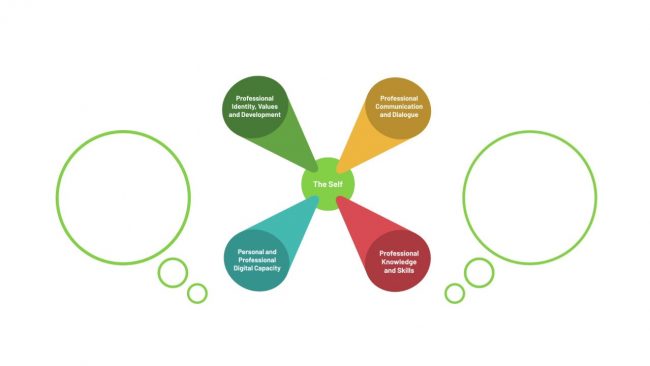
National Professional Development Framework: Domains

The PD Framework identifies five distinct areas to assist staff to explore how they may structure their professional and personal development as teachers. These areas are called domains. The flexible structure of the Framework means that an individual or group may start with any of the five domains, as they complement each other. Engagement with the scholarship of teaching and learning is an underlying component of each of the five domains.