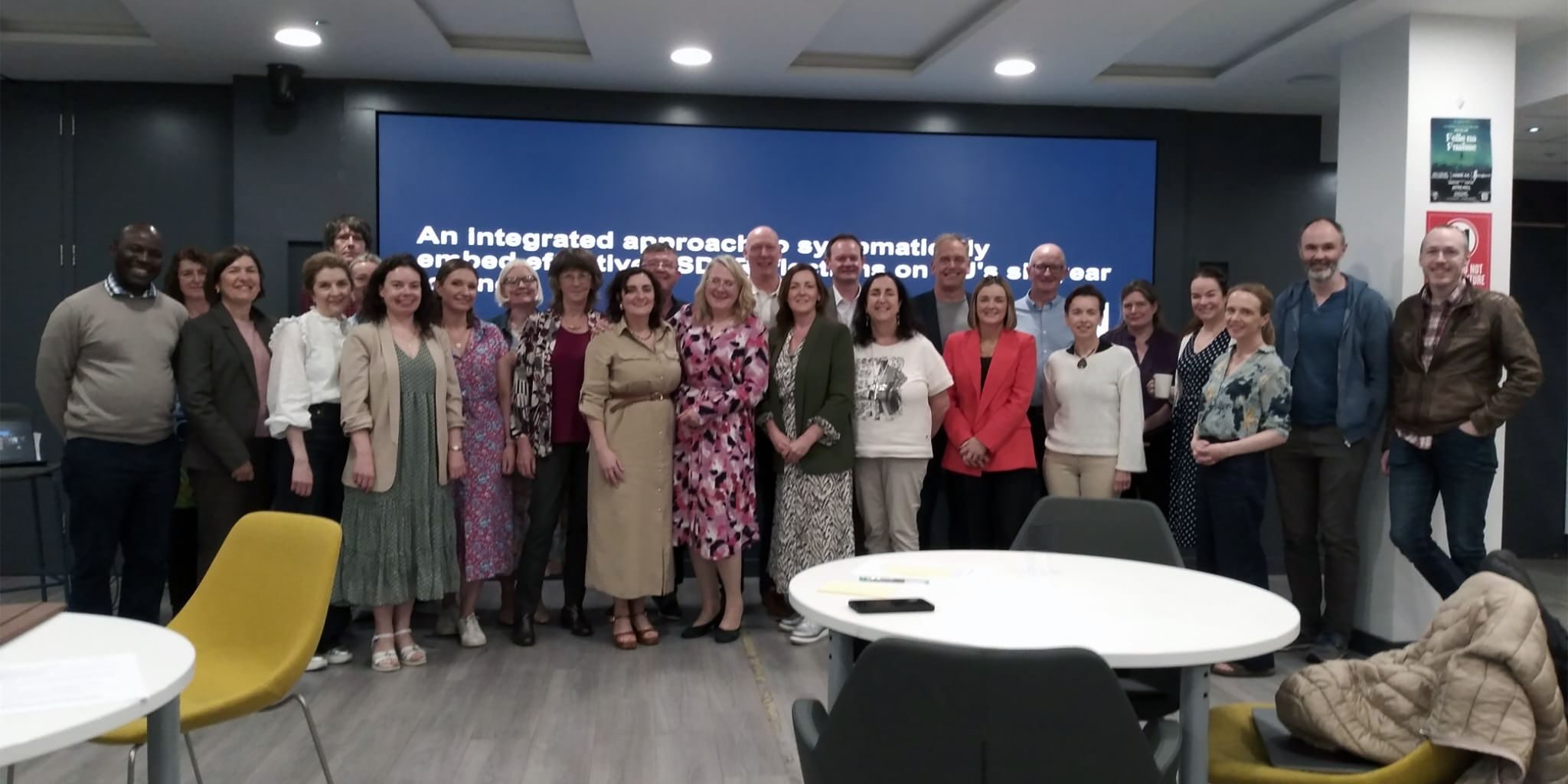
Dr Alex Ryan reflects on key insights from the recent HEA-hosted ESD and Academic Quality Workshop at UCD
‘Ireland’s universities are alive with momentum for embedding sustainability as critical to future teaching and learning. The question now is how to deepen this integration – to infuse sustainability as a defining feature of the education offered to all future professionals.
This workshop’s focus on quality in Education for Sustainable Development (ESD) recognised the criticality of these questions in delivering on the promise of ESD. Participants explored the essential interlocking aspects:
- Quality in the ‘what’ of ESD – advancing beyond the entry level practice of content-led sustainability topics and themes, to pedagogy-driven curriculum design for authentic, transformative ESD.
- Quality in ‘how’ ESD is mobilised – integrating ESD coherently in educational strategies as a catalyst for learning innovation, not just another policy theme positioned in competition to existing priorities.
- Quality in ‘where’ ESD happens – embedding ESD in core learning and assessment across disciplines, beyond optional offerings and ‘keen green’ interests, so all students experience and benefit from ESD.
This drive for quality was powerfully informed by student voices from the Anti-Greenwash Education initiative and its co-created toolkit – which was designed to enable students to evaluate and influence their course experiences. Dialogue between ESD and sustainability leaders, and education quality professionals, centred on four key student demands: clearly defining ESD, developing threshold standards, ensuring mainstream integration, and empowering students to influence quality in ESD.
Quality ESD is one of four capacity-building priorities in the UNECE ESD Strategy – and the implementation challenge requires strategies that are sensitive to institutional contexts and disciplinary diversity. Ulster University’s example of an institutional journey was followed by a group speed-coaching session, designed to access participants’ insights into this unique leadership challenge, enabling rich reflection on their professional experience and planning next steps for putting an integrated strategic approach into practice.
ESD calls for systemic and adaptive forms of educational leadership to deliver on its rich and dynamic potential. With ongoing investment in collaborative, high-quality ESD development, Ireland has an opportunity to craft a distinctive, globally relevant model of leadership in sustainability at the heart of academic practice – one that advances Ireland’s own outcomes for sustainability and signals what higher education leadership for sustainable futures can look like on the international stage.’
Dr Alex Ryan, Learning Energy sustainability consultancy – www.learning-energy.org.uk