About the Team
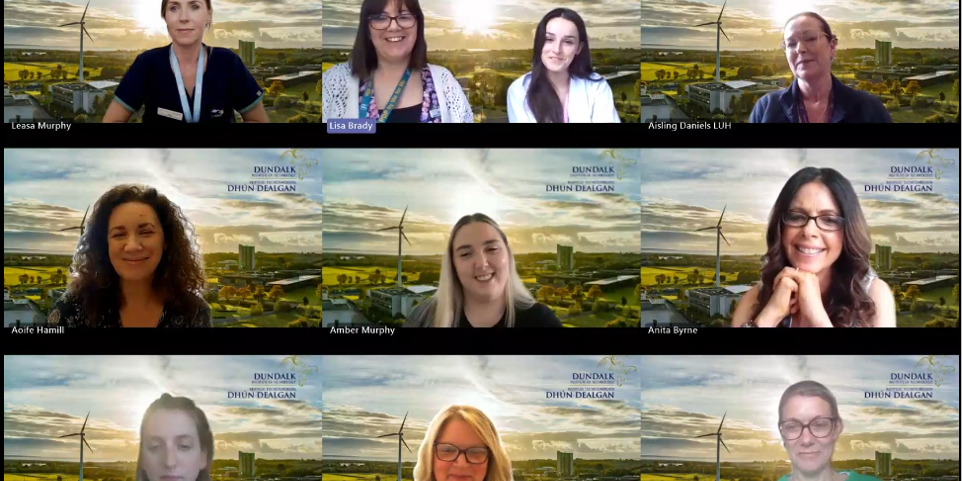
We are a committed team of midwifery students, graduates, clinical facilitators and academics, who have continued to meaningfully engage with the DELTA process since our first award in 2021. Our team is dynamic and continually welcomes new members, as students become graduates, and new staff are engaged. Our current team consists of Jill Atkinson (Head of Midwifery, DkIT), Dr. Anita Byrne (DELTA Lead), Aoibhin O’Connor (Midwifery Graduate), Chloe Mc Crickard (Midwifery Graduate), Sophie Murray (4th Year Midwifery), Eimear Hearty (4th Year Midwifery), Samantha Stewart (3rd Year Midwifery), Sonia Fields (3rd Year Midwifery), Amber Murphy (2nd Year Midwifery), Leasa Murphy (Midwifery Clinical Placement Co-Ordinator), Lisa Brady (Assistant Director of Midwifery (Academic Lead)), Aisling Daniels (Midwifery Clinical Placement Co-Ordinator), Dr. Jean Carragher (Midwifery Lecturer), Dr. Deirdre O’Malley (Midwifery Lecturer), Aoife Hamill (Midwifery Lecturer / DELTA Co-Lead), Dearbhla Bowhan (Midwifery Lecturer), Lane Galvin (Midwifery Graduate), Amy Boyle (Midwifery Graduate), Aisling Connolly (Midwifery Clinical Placement Co-Ordinator).
Key initiatives or approaches that contributed most to your DELTA Award success
We could sum this up in two words, ‘student involvement’. We are a team who are committed to sustaining learning, teaching, assessment and feedback enhancement, informed by DELTA, and we recognise that student partnership is fundamental to achieving this. Our team ethos centres on embedding meaningful, collaborative engagement with students, ensuring that partnership is fully integrated into our enhancement strategies and daily educational practices. We try hard to nurture a shared culture that really values co-design, and where staff and students work together to shape positive learning environments, both within college and across clinical placements.
How has your focus on enhancing teaching, learning and assessment impacted your students
Our students have been pivotal in co-appraising our current teaching, learning, assessment and feedback methods, and from this perspective, they have actively and meaningfully contributed to identifying the strengths and limitations of current approaches. They have provided valuable and workable insights into how their learning can be enhanced, and in doing so, students possess a strong sense of capacity and agency over their learning environments. For example, in the area of assessment and feedback, universal design principles inform multiple means of action / expression, and feedback is offered via optimal modalities, as identified by students. There is ongoing dialogue between all stakeholders, about all aspects of educational enhancement, which makes the team able to respond to emerging opportunities and challenges.
Biggest lessons learned along the way
The DELTA process has provided a really meaningful and manageable way for our midwifery team to identify what we are currently doing well, and to empower us to enhance these aspects. It has also helped us to identify facets of learning, teaching, assessment and feedback that could be improved, and importantly, how we are going to go about improving them. Some of the biggest lessons we have learned have been to celebrate and strengthen what is working well, to remain open to critically reviewing educational practices that need amendment, and to introduce changes in manageable, incremental and collaborative ways. Shared ownership for educational enhancement, that focuses on a whole team approach, forms the foundation of our educational enhancement intentions and actions.
Advice would you give other teams who want to achieve the DELTA Award
Teams aiming to achieve the DELTA Award should treat the process as a pathway towards continual educational enhancement, not necessarily a short-term project. They should be very clear about what they wish to achieve by engaging with the DELTA process, and identify a lead and co-lead to help guide effort. The DELTA rubric provides a focused strategy that will help teams craft measurable and achievable goals aligned to the Award criteria. Ongoing communication, student and collegial partnership, co-design and embedding enhancements into everyday practice, are key to creating a sustainable culture of educational excellence. We would strongly encourage teams to engage with the DELTA Award, while it will require commitment, potential enhancements far outweigh the effort involved.
What winning the DELTA Awards means to your team
As a team, we strongly believe that engaging with the DELTA process has been vital to our efforts and commitment to sustainably enhance learning, teaching, assessment, and feedback with, and for, our students. The award is a recognition and a celebration of these efforts, and it motivates the team to further embed educational excellence across midwifery education in DkIT.
Links: https://www.dkit.ie/courses/bsc-hons-in-midwifery
https://www.dkit.ie/news/2022/dkit-lecturer-wins-prestigious-inclusive-learning-award
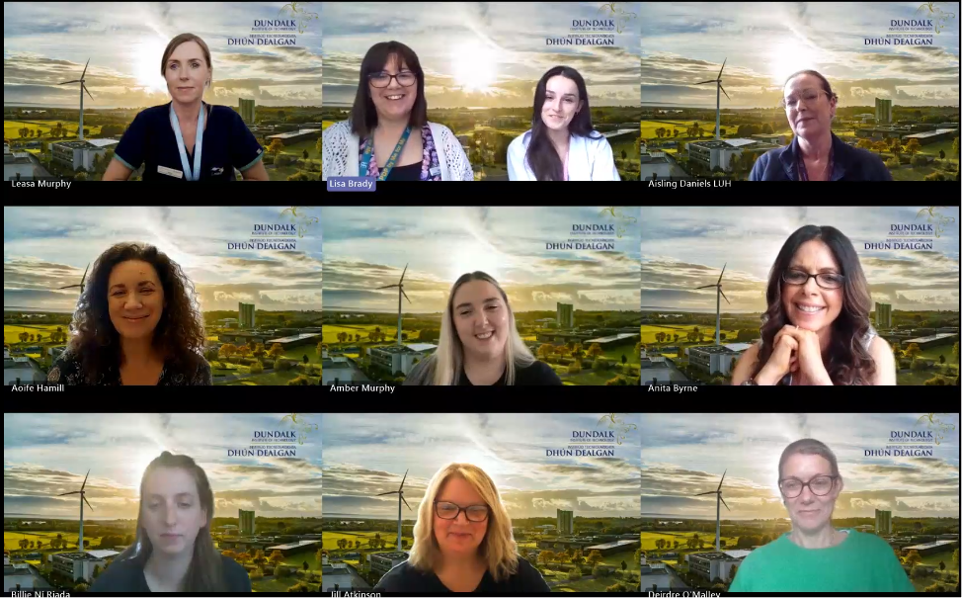
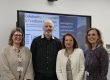
Some members of the Midwifery DELTA Award Team