
Case Study G: Using Standard Blackboard Features to Assess Students’ Usage of the VLE
Case Study G: Using Standard Blackboard Features to Assess Students’ Usage of the VLE

Case Study G: Using Standard Blackboard Features to Assess Students’ Usage of the VLE

Case Study H: Using Data to Identify Students that have not Accessed the VLE and Incorporating Feedback into Module

Collaboration and consultation are essential for whole-of-institution approaches. This resource outlines some of the colleagues that you may wish to consider working with to develop your approach.

The value of data lies in answering questions so knowing what question(s) you want to answer is an essential first step. This guide details some of the areas that data can be used to investigate.

Data quality is a major challenge for most institutions as they begin to develop a data-enabled approach, but it is a critical early step. Any answers generated by your data will only be as accurate as the data itself. This resources highlights some of the key steps to ensuring the quality of the data you have access to.

This guide details some of the key reporting features in Moodle that can be of benefit to staff who teach that wish to employ a data-informed approach to their practice.
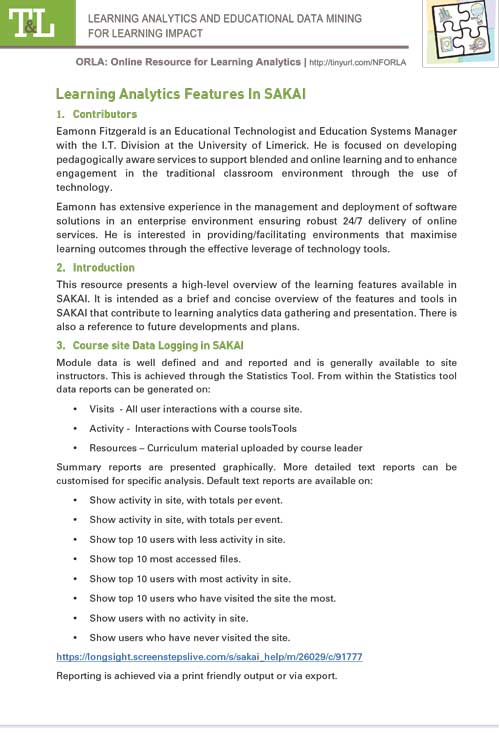
This guide details some of the key reporting features in Sakai that can be of benefit to staff who teach that wish to employ a data-informed approach to their practice.
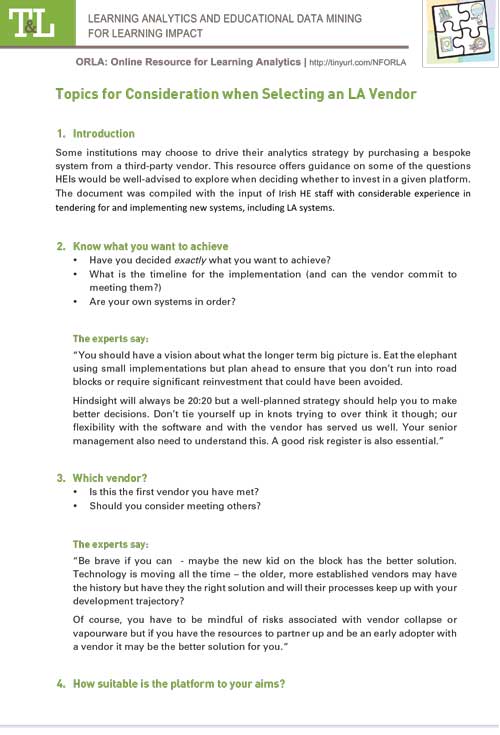
Although bespoke platforms are not essential for developing a data-informed approach, for any institution that is considering doing so, identifying the right platform is important. This document lists a number of essential considerations for opting for a reporting system that is right for your institution’s reporting needs.
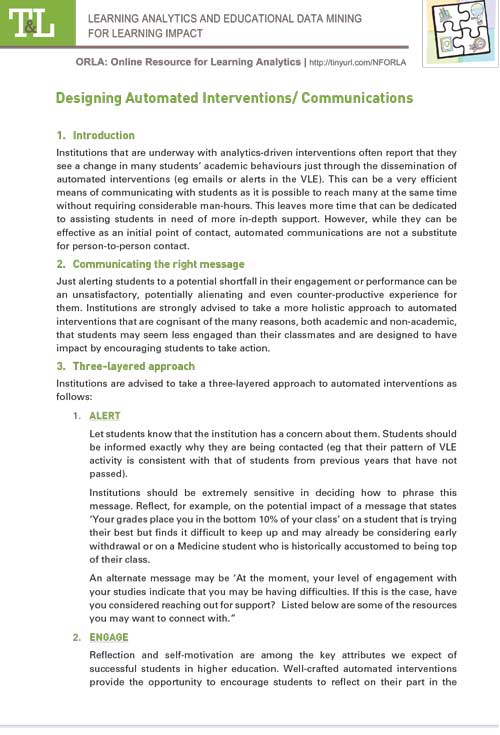
Automated interventions can be highly impactful, once they are worded and structured carefully and thoughtfully. This resource introduces some of the key steps for ensuring effective student communications.


